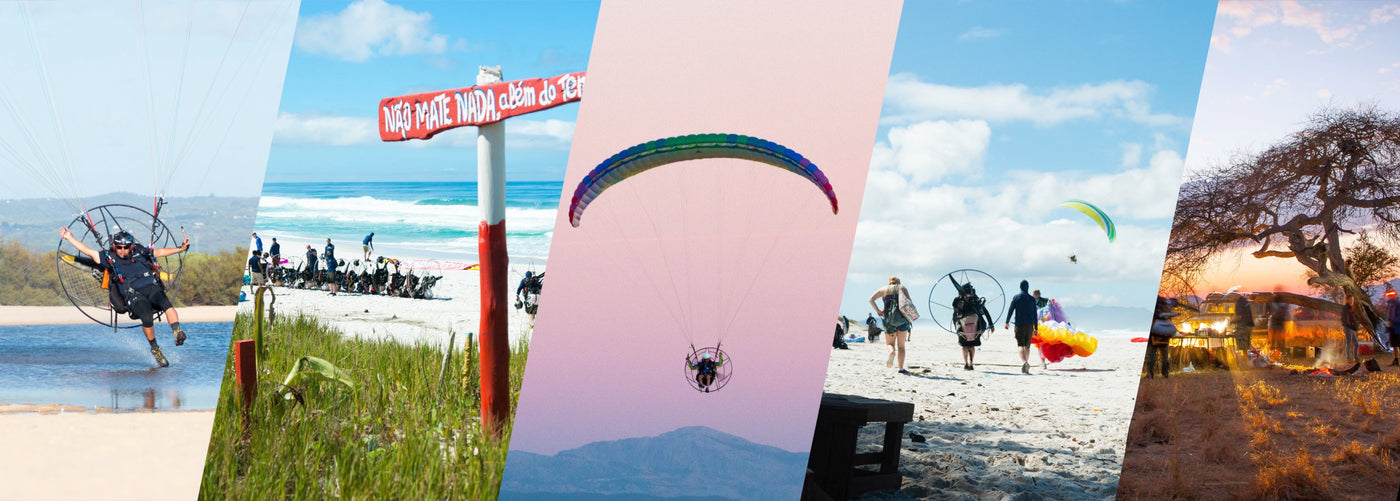

For decades, the traditional route into aviation has been the Private Pilot Licence or the National Private Pilot Licence. These courses remain a solid pathway for anyone who wants to fly fixed-wing aircraft, but in recent years, many would-be pilots have started to look elsewhere. With rising costs, longer training requirements and an uncertain economic climate, more people are turning to Paramotoring as a simpler, more accessible and far more adventurous way to get into the sky. The difference between a PPL and Paramotoring could not be bigger, yet both deliver the same breathtaking sensation of taking flight.
Why are so many pilots switching to paramotoring
A full PPL often involves many months of training, a long list of theory exams, frequent dual instruction and a large financial commitment. Even the NPPL, which is lighter in structure, still takes considerable time and money to complete. By comparison, a complete Paramotor course can be achieved in just twelve days. At SkySchool, our intensive training programme in Spain includes accommodation and costs £2,595 for the full twelve-day Pilot Course.

No Medicals, No Licence, Total Freedom
Another major difference lies in the medical requirements. To fly fixed-wing aircraft, you must pass a medical assessment that meets the standards set by the Civil Aviation Authority. These include vision tests, hearing checks, cardiovascular assessments and ongoing reviews to maintain currency. By contrast, Paramotoring in the UK has no formal medical requirements and no licence structure. It remains one of the last truly unregulated aviation activities, giving pilots far greater freedom and personal responsibility than any other form of powered flight.
The Real Cost of Getting Airborne
The contrast does not end there. A new fixed-wing aircraft can run well into six figures, with ongoing hangarage, maintenance and fuel bills following close behind. A brand new Paramotor set up, including engine, frame, paraglider, reserve and helmet starts at around £10,000. You can also find excellent second-hand kit for between £6,000 and £7,000.

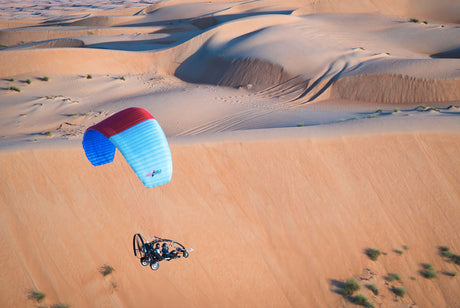
Another major advantage of Paramotoring is how easy it is to transport your equipment. A fixed-wing aircraft ties you to one airfield and usually demands hangar space, maintenance support and significant logistical planning. A Paramotor, on the other hand, can be dismantled and placed in the back of a car, a campervan, or even taken on a plane in a travel case with the wing as standard luggage. This makes it far easier to explore new sites, join overseas flying trips and enjoy true adventure flying without the burden of moving an entire aircraft from A to B.
Paramotoring costs
Running costs are equally modest. Once trained, Paramotor pilots spend around £5 to £6 an hour in fuel and oil, with very little spent on maintenance beyond occasional servicing. For many pilots, this cost difference alone is enough to make them think seriously about which route to pursue.
Of course, Paramotoring is not a fast way to travel from one place to another, nor is it a reliable form of transport. It will never compete with fixed-wing flying for speed or efficiency, as Paramotoring is governed by the weather, which anyone living in the UK knows is a fickle mistress.

But in our opinion, Paramotoring is far more adventurous than fixed-wing flying. You feel the air on your face and the freedom of flying with an unobstructed view of the land below. It is also much safer due to the slow speeds and the forgiving nature of modern wings. When the engine stops, the wing keeps flying, giving you plenty of time to glide to a safe landing.
In a time of recession, which, by the looks of things, is on the long-term forecast for 2026, many aviation lovers are searching for an affordable way to keep their passion alive. Paramotoring offers a genuine solution. For anyone who still feels that deep pull to get their feet off the ground and take to the skies, this is a realistic and exciting alternative to the fixed-wing route.
Ready to Fly in 2026?
So, what are you waiting for? Select a date and sign up for a Paramotoring course in 2026. Our full 2026 schedule of dates and prices can also be downloaded from DropBox.